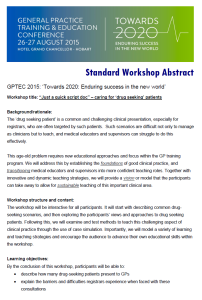
This was an 1 hour workshop presented at the General Practice Training & Education Conference, 26-27 August 2015, at the Hotel Grand Chancellor Hobart. Abstract (PDF) Authors: Paul Grinzi Genevieve Yates Michael Tam

Aug 26 2015
This was an 1 hour workshop presented at the General Practice Training & Education Conference, 26-27 August 2015, at the Hotel Grand Chancellor Hobart. Abstract (PDF) Authors: Paul Grinzi Genevieve Yates Michael Tam
Jul 30 2015
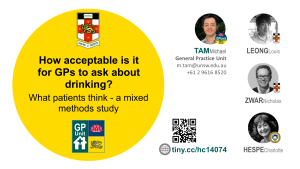
I presented this abstract (PDF, 344 KB) as an oral presentation at the 2015 Primary Health Care Research Conference, held at the Adelaide Convention Centre, 29-31 July 2015. A recorded version of the presentation is available on YouTube:
Jul 06 2015
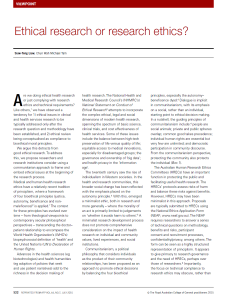
Our viewpoint article on research ethics was published in the July 2015 edition of Australian Family Physician. PDF : Web Authors: Siaw-Teng Liaw Chun Wah Michael Tam
Jul 06 2015
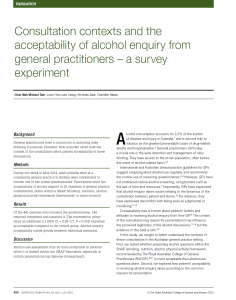
My study, a survey experiment measuring the variability in acceptability in patient acceptance to alcohol enquiry by GPs was published in the July 2015 edition of Australian Family Physician. PDF : Web Authors: Chun Wah Michael Tam Louis Hion-Lam Leong Nicholas Zwar Charlotte Hespe
Jun 19 2015
This was a presentation to GP Supervisors at “The Learning Ledge” weekend workshop, held at the Crowne Plaza Hunter Valley on Saturday 20th June 2015.
Jun 12 2015
My professional guide on the research ethics process was published in the June 2015 edition of Australian Family Physician. PDF (145 KB) : Web Authors: Siaw-Teng Liaw Chun Wah Michael Tam Abstract Background The underlying moral principles and values, and the virtues held as desirable for a researcher, should be reflected upon and embedded in the research. …